
While moderate sun exposure supports vitamin D synthesis and other physiological functions, excessive Ultraviolet (UV) radiation causes a range of physiological and biological damage, from sunburn to the induction of skin cancer.
Understanding these biological mechanisms and the skin’s natural defenses is essential for developing products that enhance resilience and protect against UV-induced damage. This article reviews how UV radiation interacts with the skin, the resulting cellular responses, and key modulating factors.
UV Radiation: Typology and Characteristics
Although invisible to the human eye, UV rays significantly affect our physiology and biology. They are categorized into three types based on their wavelength:
- UVA (320-400 nm) penetrates the epidermis and reaches the dermis, causing long-term damage such as wrinkles and some types of skin cancers.
- UVB (280-320 nm) is mostly absorbed by the ozone layer, but a small portion reaches the epidermis, where it can damage DNA, cause sunburn, and contribute to most types of skin cancers.
- UVC (100-280 nm) is entirely absorbed by the ozone layer and does not reach Earth’s surface. However, UVC can be produced by artificial sources, such as UV sanitizing bulbs used for germicidal purposes.
Note: The amount of solar UV radiation reaching Earth’s surface depends on factors including the sun’s angle, altitude, latitude, cloud cover, ozone layer thickness, and ground reflection. But recent ozone layer depletion has increased UV radiation at the surface, negatively impacting ecosystems and human health by increasing rates of skin cancer, cataracts, and immune system impairment.
Biological Responses of the Skin to UV Radiation
Effects of UVA and UVB on the Skin
UVA and UVB rays stimulate the synthesis, darkening, and thickening of the outer skin layers, which helps prevent deeper UV penetration and additional damage.
UVA radiation penetrates deeply, reaching the epidermis, dermis, connective tissue, and blood vessels. Exposure to UVA rays can cause the following effects:
- Gradual loss of skin elasticity and suppleness, leading to premature aging.
- Stimulation of melanocytes, which produce melanin in epidermal cells, resulting in a tan that develops and fades quickly.
In contrast, UVB radiation affects only the epidermis and leads to the following:
- Increased melanin production within a few days, resulting in a longer-lasting tan and greater epidermal thickness.
- Sunburn, which increases the risk of skin cancer.
- Increased risk of melanoma and other skin cancers.
- Stimulation of vitamin D synthesis, which supports calcium and phosphorus absorption, bone health, immune function, and hematopoiesis. It is important to balance the benefits and risks of sun exposure.
Cellular Response
Various skin cell types respond differently to UV radiation.
Keratinocytes in the epidermis are the first cells exposed to UV and play key roles in initiating inflammation and maintaining the skin barrier.
Melanocytes increase melanin production as a natural photoprotective response, contributing to tanning.
UV exposure alters dermal fibroblast activity, disrupting collagen and elastin synthesis, reducing skin firmness, and increasing wrinkle formation.
DNA Alteration: Mutations, and Oxidative Stress
All forms of UV radiation damage DNA by generating free radicals, which cause oxidative stress. This process alters DNA bases, disrupts genetic information, and promotes mutations.
The skin regulates antioxidant defenses to optimize tolerance to sunlight. Its antioxidant systems neutralize free radicals before significant damage occurs, and repair mechanisms help maintain genetic integrity.
However, intense or repeated sun exposure can overwhelm these defenses, leading to oxidative stress and a higher risk of skin tumors and cancers.
Change in the Skin Microbiome
Sunlight affects the skin microbiome, the community of microorganisms on the skin’s surface. UV rays can disrupt its balance, reducing beneficial populations and weakening the skin barrier. This increases inflammation and vulnerability to damage.
Natural Skin Defense Mechanisms
Integrity of the Skin Barrier
The skin barrier is the primary defense against external aggressors, including UV rays. It consists of corneocytes in the outermost layer and intercellular lipids that ensure cohesion and impermeability. An intact barrier limits water loss, preserves hydration, and reduces penetration by harmful agents.
However, repeated sun exposure disrupts the skin barrier. UV radiation alters lipid composition, weakens cellular cohesion, and increases water loss. As a result, the skin becomes drier, more reactive, and more permeable, which promotes inflammation and discomfort and accelerates photoaging.
Melanin Protective Power
Upon sunlight exposure, melanocytes increase melanin synthesis. This pigment darkens the skin and results in tanning.
Tanning is a skin’s natural defense to absorb UV radiation, prevent further cellular damage, and limit penetration into deeper tissues.
Modulating Factors
The skin’s response to sun exposure varies according to phototype, age, and cumulative exposure.
Phototypes
Individuals with blond or red hair generally have lower melanin levels, making them more sensitive to both acute and chronic UV effects. Uneven melanin distribution may also cause freckles.
Darker skin contains more melanin, providing greater resistance to UV radiation. However, it remains susceptible to both immediate and long-term effects of sun exposure.
Individuals with albinism produce little or no melanin and cannot tan. Sun exposure is therefore especially harmful for them in both the short and long term.
Age
Aging reduces the skin’s protective capacity and changes how it responds to sun exposure. The ability to tan declines with age for several reasons:
- The number and activity of melanocytes decrease.
- Melanin production declines and becomes uneven, which can result in age spots.
- The tanning process slows and becomes less effective.
As tanning ability decreases, the skin becomes more susceptible to UV radiation.
- The skin’s ability to repair DNA diminishes.
- Natural antioxidant defenses are weakened.
- The skin becomes thinner and drier, and its protective barrier weakens.
These changes make the skin more sensitive to sun damage.
Cumulative Exposure
The effects of sun exposure accumulate over time. Lifelong UV exposure has a lasting impact, and unaddressed damage accelerates photoaging and chronic lesion development.
As a result, the risk of pigment spots, actinic keratoses, and skin cancer increases with age and higher exposure.
Note: Experiencing five or more blistering sunburns early in life is associated with an 80% increased risk of developing melanoma.
To conclude
The skin responds to UV radiation through defense mechanisms such as melanin production, antioxidant activation, and barrier maintenance. However, these responses are limited and influenced by phototype, age, and cumulative exposure.
A thorough understanding of these processes is essential for cosmetic professionals, as it guides the selection of protective, hydrating, and reparative ingredients.
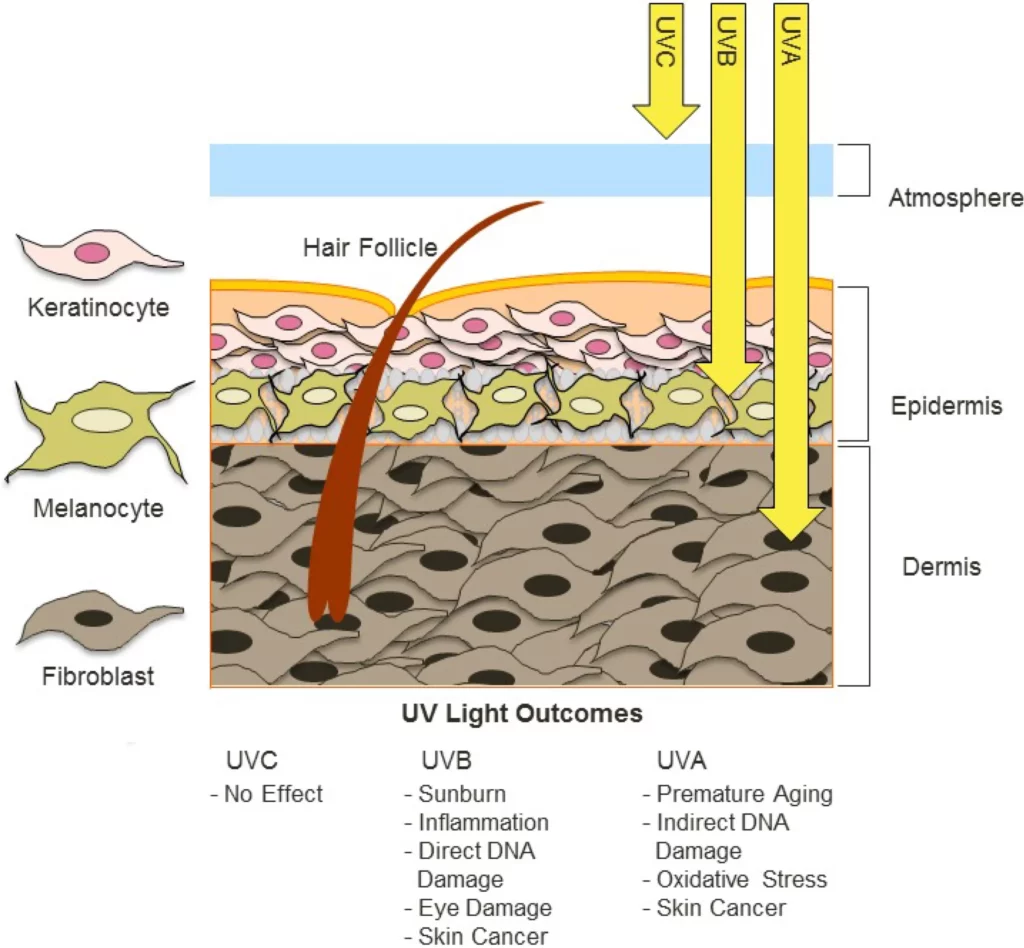
Title : UV radiation in sunlight is composed of three types of energy: UVA, UVB and UVC, impacting the skin at cellular level.
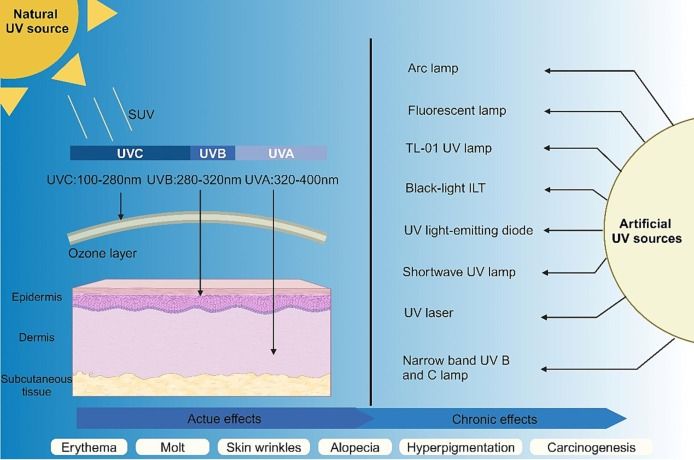
Title : UV radiation can be solar or artificial. The exposure to UV radiation can have acute or chronic effects.